Acoustic Panel Solutions for Modern Interior Spaces
Explore acoustic panel solutions for modern interiors. Learn how decorative acoustic wall panels reduce noise, improve comfort, and elevate design in residential, office, and commercial spaces.

Acoustic Panel Solutions for Modern Interior Spaces
In modern architecture and interior design, controlling sound quality has become just as important as visual aesthetics. Open-plan offices, residential apartments, commercial venues, and educational spaces all face a common challenge: excessive noise and poor acoustic comfort.
This is where acoustic panels play a critical role.
Why Acoustic Control Matters in Modern Spaces
As buildings become more open and minimalist, hard surfaces such as glass, concrete, and metal are widely used. While visually appealing, these materials often create:
- Excessive echo and reverberation
- Reduced speech clarity
- Increased noise fatigue in long-term environments
- Poor privacy in shared spaces
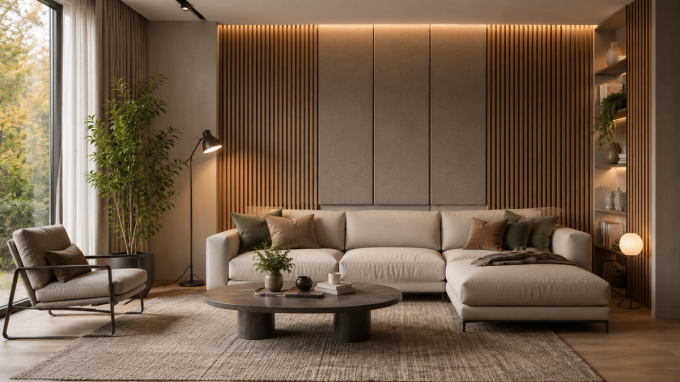
In offices, this leads to lower productivity. In homes, it affects comfort. In commercial environments, it directly impacts customer experience.👉 The core issue is simple: Modern design improves aesthetics but often damages acoustic performance.
What Is an Acoustic Panel?
An acoustic panel is a specially engineered wall or ceiling material designed to absorb sound energy instead of reflecting it.Unlike traditional decorative panels, acoustic panels are built with:
- Sound-absorbing core materials (e.g., PET fiber)
- Structural designs that reduce reverberation time
The result is a quieter, clearer, and more comfortable indoor environment.
How Acoustic Panels Work
Sound travels in waves. When these waves hit hard surfaces, they bounce back, creating echo.Acoustic panels reduce this effect through three mechanisms:
- Absorption – converting sound energy into minimal heat energy
- Diffusion – scattering sound waves in multiple directions
- Damping – reducing vibration transmission through wall systems
👉 The overall effect is a controlled acoustic environment with reduced noise intensity and improved clarity.
Key Applications of Acoustic Panels
Acoustic panels are widely used across different industries and space types:
1. Office Spaces
- Open-plan workstations
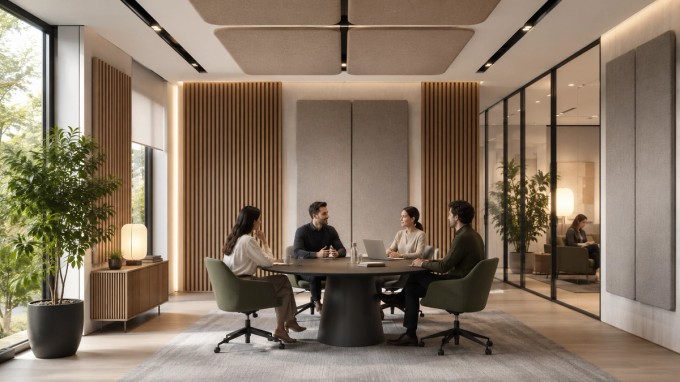
- Meeting rooms
- Call centers
Benefits:
- Improves speech clarity
- Reduces distraction
- Enhances productivity
2. Residential Interiors
- Living rooms
- Bedrooms
- Home theaters
Benefits:
- Reduces echo in minimalist interiors
- Improves TV/audio experience
- Enhances comfort and privacy
3. Commercial Spaces
- Hotels
- Restaurants
- Retail stores
Benefits:
- Creates a premium customer experience
- Reduces background noise
- Improves ambience control
4. Educational & Public Buildings
- Classrooms
- Lecture halls
- Libraries
Benefits:
- Improves learning clarity
- Reduces fatigue from noise
- Enhances communication efficiency
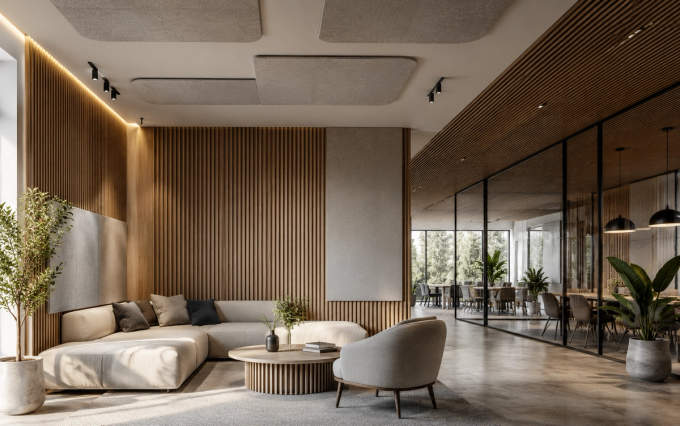
Benefits of Using Acoustic Panels
Installing acoustic panels brings both functional and commercial value:
✔ Improved Acoustic Comfort
Reduces echo and creates a balanced sound environment.
✔ Enhanced Interior Design
Modern panels integrate seamlessly into architectural styles.
✔ Increased Space Value
Better acoustic environments improve perceived quality of space.
✔ Flexible Installation
Can be applied on walls, ceilings, and partitions.
✔ Sustainable Building Performance
Many acoustic materials support green building standards.
Acoustic Panels in Modern Design Trends
Today’s interior design trends strongly support acoustic integration:
- Minimalist architecture → requires hidden acoustic optimization
- Open-space offices → require sound zoning
- Hospitality design → focuses on experience-driven acoustics
👉 Acoustic panels are no longer optional—they are a core part of modern interior systems.
Conclusion
As interior spaces become more open and visually minimal, acoustic performance becomes a critical design factor.
Acoustic panels provide a practical and scalable solution by combining sound absorption, design flexibility, and architectural integration.
Whether for residential, commercial, or industrial applications, they help create spaces that are not only visually modern—but also acoustically optimized.