B2B MDF Acoustic Wall Panel Market Analysis 2026
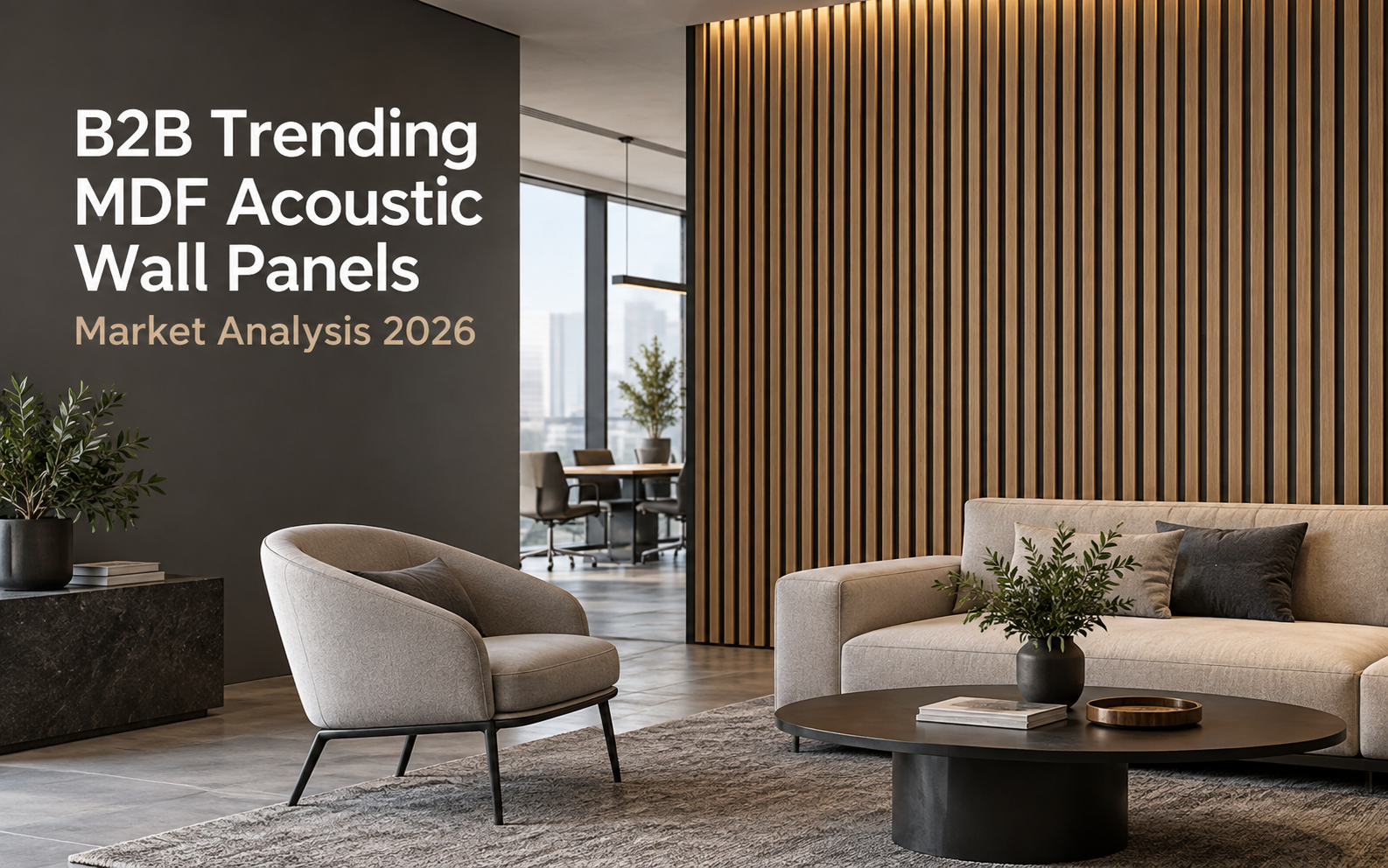
B2B Trending MDF Acoustic Wall Panel Products Market Analysis 2026
MDF acoustic wall panels have developed from functional sound-absorbing materials into popular decorative products. Combining MDF slats, wood-style finishes and PET felt backing, these panels are now widely used in living rooms, offices, studios, hotels and commercial interiors.
For wholesalers and retailers, however, the market is becoming more competitive. Standard oak panels are widely available, so product selection can no longer be based on price alone. Colors, specifications, certifications, packaging and installation experience all influence retail performance.
This 2026 market analysis highlights the major trends and provides practical sourcing advice for MDF acoustic wall panel distributors and retailers.
MDF Acoustic Wall Panel Market Overview
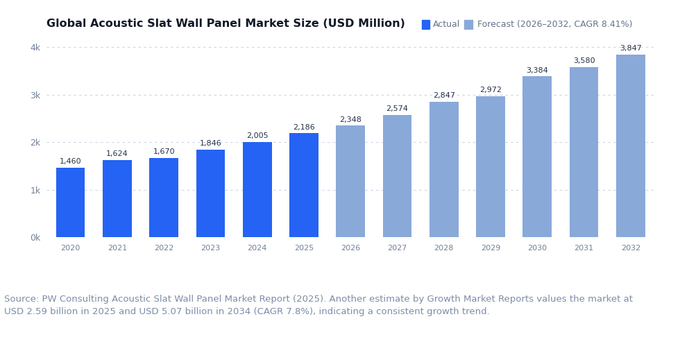
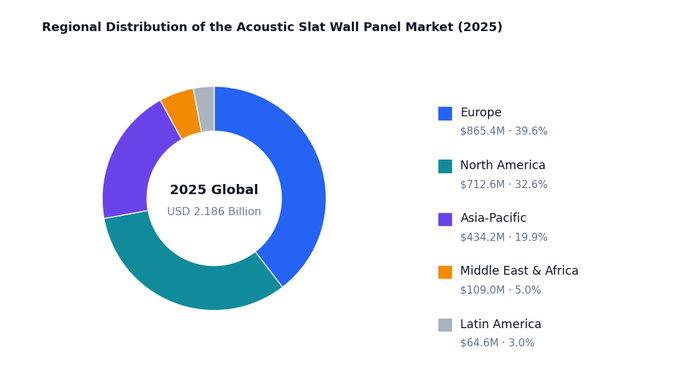
Third-party market research estimates that the global acoustic slat wall panel market reached approximately USD 2.19 billion in 2025. It is projected to reach around USD 3.85 billion by 2032, representing an estimated compound annual growth rate of 8.4%.
MDF slats with wood veneer or decorative finishes and PET felt backing account for approximately 60% of the category’s material share. This makes the MDF and PET composite structure one of the most established products in the decorative acoustic panel market.
The market is still growing, but it is moving from rapid expansion toward more mature competition. Generic products are facing price pressure, while buyers increasingly value distinctive designs, reliable quality and proper compliance documentation.
The figures above are third-party market estimates and should be treated as directional indicators rather than fixed sales forecasts.
Regional Market Changes
Demand varies considerably between regions. Wholesalers should therefore adapt their product ranges to local preferences instead of offering the same collection in every country.
Europe
Europe represented approximately 39.6% of the global acoustic slat panel market in 2025, making it the largest regional market.
Germany remains one of the most competitive Amazon markets for the category. Local brands perform well by emphasizing German manufacturing, natural veneer, large panel sizes and environmental credentials. Buyers in Germany and other European countries generally pay close attention to formaldehyde emissions, fire performance, wood sourcing and packaging quality.
The UK market combines premium local brands with more affordable imported products. Natural oak, walnut and complete installation kits offer good potential for distributors targeting British retailers and interior projects.
North America
North America accounted for approximately 32.6% of the global market. Demand is supported by DIY renovations, home offices, living-room feature walls and home entertainment spaces.
The United States offers strong sales potential but also intense competition. Amazon data indicates that leading listings can sell more than 2,600 sets per month. Standard two-panel and four-panel packs remain popular, while modular and flexible products are creating new opportunities.
For the US and Canadian markets, retailers should focus on easy installation, clear coverage information, protective e-commerce packaging and attractive before-and-after visuals.
Asia-Pacific
Asia-Pacific accounted for approximately 19.9% of the market and offers growth opportunities in offices, schools, hotels and public buildings.
Japan and Australia tend to favor good design, reliable quality and easy installation. Smaller modular panels may be particularly suitable for Japanese apartments and limited wall spaces.
In Southeast Asia, buyers are more likely to ask about moisture resistance and dimensional stability. Standard MDF panels should not be promoted as fully waterproof. Suppliers should clearly explain suitable installation environments and offer moisture-resistant material options where necessary.
Middle East and Africa
The Middle East and Africa represented around 5% of the market. Demand is more project-driven, particularly in hotels, restaurants, offices, recording studios and high-end residential developments.
Buyers in these regions often prioritize customization, container utilization, project delivery and competitive total cost. Dark wood tones, walnut and smoked oak can be suitable for premium commercial interiors.
Latin America
Latin America represented approximately 3% of the global market and remains an emerging region for decorative acoustic panels.
Standard oak and walnut panels, smaller formats and cost-efficient packaging may be more suitable for price-sensitive markets. Spanish or Portuguese installation instructions can also improve the retail experience.
What Is Driving Demand in 2026?
Demand is increasingly driven by decorative value rather than acoustic performance alone.
Amazon sales and customer feedback show that decorative wood slat panels generally outperform products positioned only as soundproofing materials. Consumers are usually attracted by the visual transformation first, while improved acoustic comfort provides additional value.
Retailers should therefore position these products as decorative wall panels with sound-absorbing properties. They should not claim that the panels can completely block sound unless appropriate test results support that statement.
Important application areas include:
- Living rooms and television walls
- Home offices
- Studios and content-creation rooms
- Meeting rooms and offices
- Hotels and restaurants
- Retail and reception areas
Easy installation is another important purchasing factor. Products that are easy to cut, align and fix are more suitable for DIY and online retail channels.
Trending MDF Acoustic Wall Panel Products
Standard MDF slat panels
The standard structure combines MDF slats with black, grey or beige PET felt. These products remain the foundation of most wholesale collections.
Because competition is high, suppliers and distributors need to differentiate through slat width, spacing, finish, felt color or panel size.
Natural wood veneer panels
Natural oak and walnut veneer panels serve the middle and premium markets. They provide more authentic grain and higher perceived value than printed decorative paper.
These products are suitable for interior design companies, commercial projects and premium building material retailers. Buyers should agree on acceptable color and grain variations before placing a bulk order.
Small modular panels
Smaller panels are easier to handle, store and ship. They also allow consumers to decorate a limited wall area without committing to a full-room installation.
Modular formats are suitable for apartments, e-commerce sales and DIY renovation projects.
Flexible acoustic panels
Flexible or rollable panels can be installed on columns, curved walls and irregular surfaces. They may also provide more efficient packaging than some full-size rigid panels.
This product segment is less standardized and can help distributors create a more differentiated collection.
Complete panel kits
Retail-ready kits can include panels, matching end trims, installation accessories and instructions. These kits simplify purchasing for consumers and can increase the average order value.
Popular Colors and Finishes
Wood tones continue to dominate the MDF acoustic panel category.
| Color or Finish | Market Position | Recommended Applications |
|---|---|---|
| Natural Oak | Core bestseller | Living rooms, offices and retail interiors |
| White Oak | Light Scandinavian style | Apartments and modern offices |
| Walnut | Warm and premium | Hotels, studios and executive spaces |
| Smoked Oak | Contemporary | Restaurants and feature walls |
| Black | Modern and commercial | Studios, cinemas and offices |
| Grey | Neutral and architectural | Corporate and public spaces |
| Teak | Warm decorative style | Residential and hospitality projects |
For a new collection, wholesalers can begin with natural oak, white oak and walnut. Black, grey or smoked oak can then be added for specific design markets.
A focused range is usually easier to manage than launching too many similar colors.
How to Plan a Wholesale Product Range
A balanced product portfolio should cover different customer groups without creating excessive inventory.
Entry-level range
Entry-level products can use decorative paper or standard laminated finishes. Smaller panels and two-panel packs can reduce the initial purchase cost for consumers.
These products are suitable for online promotions and price-sensitive retail channels.
Core sales range
The report shows that standard four-panel sets in mainstream price segments achieved some of the strongest Amazon sales.
A core wholesale range should combine:
- Popular oak and walnut finishes
- Standardized panel dimensions
- Stable MDF and PET felt specifications
- Easy installation
- Protective retail packaging
Premium range
Premium panels can use natural wood veneer, higher-density MDF, better surface finishing or certified low-emission materials.
Large panels and customized slat designs can also support a higher-value market position.
Project range
Commercial projects may require specific acoustic, fire and formaldehyde test reports. They may also need custom sizes and consistent production between batches.
Distributors serving architects and contractors should verify all technical documentation before recommending a product for commercial use.
Quality Checklist for Wholesale Buyers
Before placing a bulk order, buyers should inspect:
- MDF density, thickness and dimensional stability
- Slat width and spacing consistency
- Surface color and grain
- Edge-cutting quality
- Adhesion between the MDF slats and PET felt
- PET felt thickness and density
- Panel flatness
- Formaldehyde emissions
- Available acoustic test reports
- Fire-performance documentation
- Consistency between samples and mass production
- Packaging protection
A trial installation is also recommended. It can reveal alignment problems, difficult cutting, visible joints or unclear installation instructions before the products reach customers.
Certifications and Compliance
Compliance requirements vary by country and application.
European buyers commonly focus on formaldehyde emissions, fire performance, FSC certification, wood sourcing and material traceability. North American buyers may require formaldehyde, indoor air quality and fire-related documentation, especially for commercial projects.
One report may not apply to every panel structure, size or market. Buyers should confirm that the test report matches the product they intend to purchase.
Packaging and Logistics
MDF acoustic panels are relatively large and can be damaged during transportation. Packaging and logistics therefore have a direct effect on profit and customer satisfaction.
Wholesalers should evaluate:
- Carton dimensions and weight
- Number of panels per carton
- Container-loading quantity
- Edge and corner protection
- Moisture protection
- E-commerce drop resistance
- Retail labels and barcodes
- Replacement arrangements for damaged panels
- Mixed-color and mixed-SKU loading options
Products sold through Amazon or independent online stores usually require stronger individual packaging than products delivered directly to wholesale warehouses.
Common Purchasing Mistakes
Wholesalers and retailers should avoid several common mistakes:
- Comparing only the factory price
- Ordering too many similar colors
- Claiming soundproofing performance without test support
- Ignoring installation instructions and accessories
- Using residential products for commercial projects without checking compliance
- Underestimating packaging, shipping and storage costs
A lower purchase price does not always produce a better margin. Product damage, negative reviews and returns can quickly eliminate the initial cost advantage.
Recommendations for B2B Buyers
For 2026, wholesalers, retailers and distributors can consider the following strategy:
- Build the core range around natural oak, white oak and walnut.
- Offer both standard and premium veneer options.
- Add modular, flexible or accessory-supported products for differentiation.
- Present decorative value first and acoustic comfort second.
- Adjust specifications and marketing to regional preferences.
- Check certification and test reports before entering a new market.
- Use packaging designed for the actual retail and shipping channel.
- Test samples and complete a trial installation before bulk purchasing.
- Prepare inventory ahead of the main renovation season.
Conclusion
The MDF acoustic wall panel market still offers opportunities in 2026, particularly in Europe and North America. Asia-Pacific, the Middle East and Latin America also provide growth potential through commercial projects and developing retail demand.
However, the category is becoming more mature. Standard products are facing stronger competition, while buyers increasingly expect better design, easier installation, reliable quality and complete documentation.
For wholesalers and retailers, the most effective strategy is to build a focused product range for each target market. A combination of core wood colors, differentiated formats, appropriate certifications and protective packaging can create more sustainable sales than competing on price alone.