Fluted Wall Panels: Material, Cost & Ideas Guide
Compare fluted vs. slat panels, solid wood vs. PVC, real costs, room design ideas, and humid space installation tips in our ultimate homeowner guide.
Fluted Wall Panels: Material, Cost & Ideas Guide
What Is a Fluted Wall Panel?
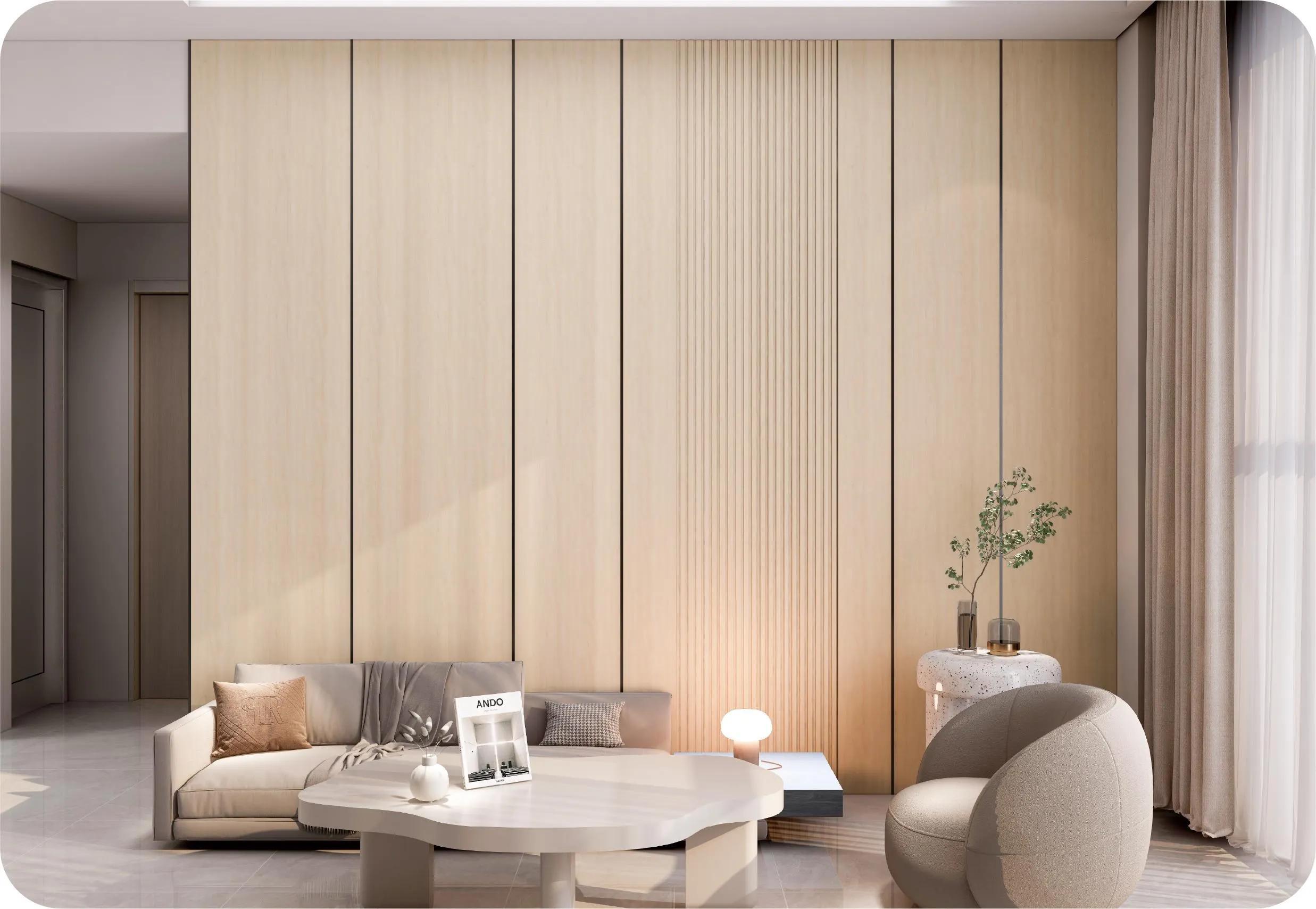
A fluted wall panel is an architectural wall covering characterized by a continuous series of vertical, concave grooves or rounded ridges. Rooted in classical architecture—drawing direct inspiration from the fluted columns of ancient Greece and Rome—modern fluted panels bring depth, shadow, and linear texture into contemporary interiors.
Beyond aesthetics, fluted paneling visually elongates ceilings, softens harsh room angles through gentle shadow play, and conceals minor drywall imperfections without the need for extensive structural repairs.
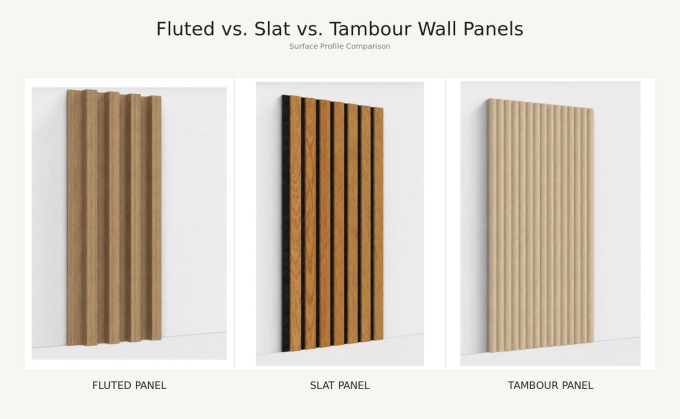
Fluted vs. Slat vs. Tambour Wall Panels
Because these three wall panel styles look visually similar at a quick glance, understanding their distinct differences is crucial before choosing one for your project:
| Attribute | Fluted Wall Panels | Acoustic Slat Panels | Tambour Panels |
|---|---|---|---|
| Surface Profile | Continuous concave / scalloped ridges | Flat rectangular slats with gaps | Narrow individual slats on flexible fabric |
| Visual Effect | Soft, organic shadows and fluid movement | High-contrast, modern architectural lines | Fine-textured relief with a tight bend radius |
| Flexibility | Rigid boards, unless flexible-backed | Rigid composite or MDF on acoustic PET felt | Highly flexible; wraps tight curves and columns |
| Primary Use Case | Accent walls, headboards, kitchen-island wraps | Home theaters, open-plan spaces, TV backdrops | Curved pillars, rounded cabinets, bar fronts |
- Fluted Panels: Feature continuous semi-circular grooves, creating soft, fluid transitions of light and shadow.
- Slat Panels: Feature flat wooden strips mounted side-by-side onto sound-absorbing acoustic felt.
- Tambour Panels: Feature ultra-narrow wooden strips glued to a flexible cloth backing, designed specifically to wrap around tight curves and rounded surfaces.
Why Are Fluted Panels Popular?
- Light and Shadow Dynamics: The scalloped texture catches directional natural light and ambient LED strip lighting, producing evolving gradient shadows throughout the day.
- Biophilic & Versatile Design: Fluted designs fit effortlessly into Japandi (Japanese-Scandi), Mid-Century Modern, Minimalist, and Modern Organic interior aesthetics.
- Illusion of Height: The strong vertical lines draw the eye upward, making standard 8-foot ceilings feel significantly taller.
Fluted Wall Panel Materials Compared
- Solid Hardwood (Oak, Walnut, Pine): Offers authentic grain, luxury feel, and high durability. High material cost; susceptible to expansion or warping in high-humidity areas if unsealed.
- Wood Veneer with MDF Core: The industry standard for balance. Real wood appearance with superior dimensional stability against temperature fluctuations. Requires protective sealants for moist zones.
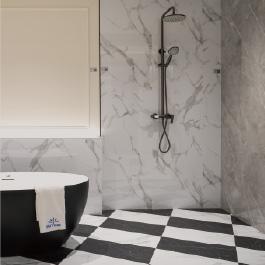
- WPC / PVC / Charcoal Composite: 100% waterproof, rot-resistant, and impact-resistant. The ideal choice for bathrooms, basements, and high-traffic commercial spaces.
- High-Density Polyurethane (PU / Duropolymer): Ultra-lightweight and moisture-proof. Usually arrives pre-primed, making it easy to paint in any custom color code.
Fluted Wall Panel Retail Prices: What Homeowners Can Expect
Understanding material and labor costs helps ensure realistic budgeting for home improvement projects:
| Material Category | Paintable Polyurethane / MDF | WPC / Waterproof PVC | Real Wood Veneer | Solid Hardwood |
|---|---|---|---|---|
| Materials Only (per sq. ft.) | $5.00 – $11.00 | $7.00 – $15.00 | $12.00 – $22.00 | $20.00 – $40.00+ |
| Labor Installation (per sq. ft.) | $3.00 – $6.00 | $4.00 – $7.00 | $4.00 – $8.00 | $8.00 – $15.00 |
| Estimated Budget (100 sq. ft. Wall) | $800 – $1,700 | $1,100 – $2,200 | $1,600 – $3,000 | $2,800 – $5,500+ |
Pro Tip: Always calculate an extra 10% to 15% waste margin for corner cuts, outlet scribing, and off-cuts.
Pros and Cons of Fluted Wall Panels
Pros
- Elevates interior design value with tactile, architectural depth.
- Seamlessly conceals hidden doors (jib doors), electrical wiring, and wall blemishes.
- Waterproof variants (PVC/WPC) solve aesthetic challenges in damp environments.
Cons
- Dust Accumulation: The concave grooves trap dust more easily than flat walls, requiring specialized vacuum attachments or duster wands.
- Precision Cutting Required: Measuring around electrical outlets, light switches, and wall corners requires precise jigsaw or miter saw cuts.
Design Ideas by Room
- Living Room TV Accent Wall: Pair natural wood fluted panels with floating media consoles and back-lit LED strips for a cinematic focal point.
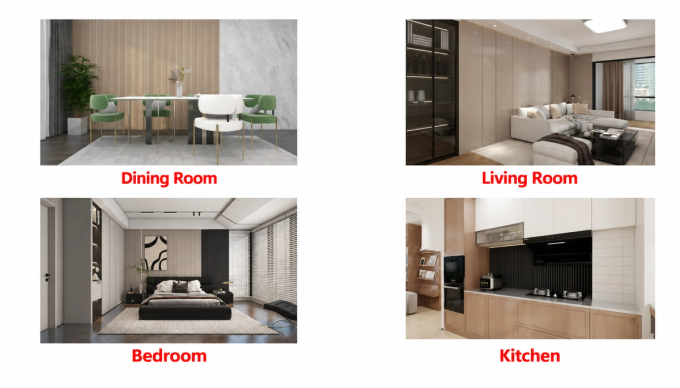
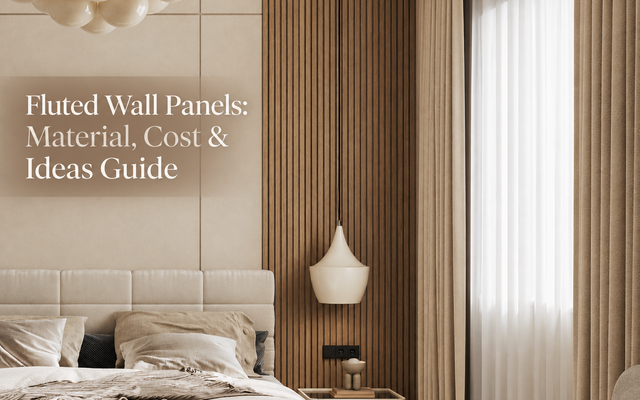
- Bedroom Headboard Extension: Run floor-to-ceiling panels behind the bed to replace traditional headboards with a warm, cocooning texture.
- Kitchen Island Wrapping: Wrap the base of a kitchen island or breakfast bar with flexible fluted panels to resist scuffs while adding tactile interest.
- Entryway Nook: Combine paintable fluted paneling with coat hooks and a floating bench to define a functional yet stylish mudroom area.
- Home Office Acoustic Backdrop: Install wood veneer panels behind your desk to improve video call backdrops while reducing room echo.
How to Choose Panels for Dry, Humid and Commercial Spaces
- Dry Spaces (Bedrooms, Living Rooms): Choose Real Wood Veneer or MDF for natural warmth, authentic wood grain, and paint flexibility.
- Humid Spaces (Bathrooms, Basements, Laundries): Opt exclusively for 100% WPC or PVC. Install using heavy-duty construction adhesive combined with mildew-resistant silicone sealant.
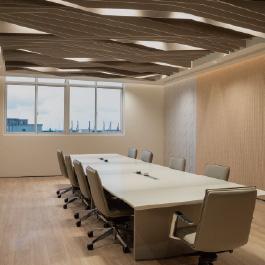
- Commercial Spaces (Hotels, Offices, Restaurants): Require Class A Fire-Rated composite or aluminum fluted panels built to withstand heavy physical contact and stringent commercial building codes.
Installation Considerations: Adhesive, Substrate, Corners and Profiles
- Substrate Preparation: Wall surfaces must be clean, dry, and flat. If the underlying drywall is uneven, install a 1/4-inch plywood backing layer first.
- Adhesive vs. Fasteners:
- Apply heavy-duty construction adhesive (e.g., Liquid Nails or polyurethane glue) in a zig-zag pattern on the panel back.
- Secure panels temporarily using 18-gauge brad nails shot directly into the shadow grooves until the adhesive cures fully.
- Corners and Edge Profiles: Use matching L-shape trim pieces, end caps, or cut a 45-degree miter joint along panel edges for clean outer corner transitions.
Cleaning and Maintenance
- Routine Dusting: Dust weekly along the vertical grooves using a microfiber duster or a soft brush vacuum attachment.
- Spot Cleaning: Wipe down surface marks using a damp cloth wrung out with mild dish soap and warm water. Avoid abrasive scrubbers or strong chemical solvents.
- Wood Care: Treat raw or unvarnished real wood veneer panels once a year with clear wood wax oil to preserve moisture resistance and prevent drying or splitting.
FAQs
Q1: Can fluted wall panels be installed directly over existing drywall or tile?
Yes. Over smooth drywall, heavy-duty construction adhesive combined with finishing brad nails works directly. For smooth ceramic tiles, scuff the surface with medium-grit sandpaper first and use a polyurethane-based adhesive.
Q2: Do fluted wall panels help with room acoustics?
Standard fluted panels diffuse sound waves slightly due to their curved surfaces, reducing flutter echo. However, for significant soundproofing or absorption, select specialized acoustic slat panels backed by thick PET felt.
Q3: How do you fit fluted panels around electrical outlets?
Measure and mark the electrical box location on the panel back. Cut out the opening using a jigsaw. After mounting the panel, install electrical box extenders so your outlet covers sit flush against the outer face of the fluted panel.