What Is a Baseboard? Types, Materials, Sizes, and How to Choose
What Is a Baseboard? Types, Materials, Sizes, and How to Choose
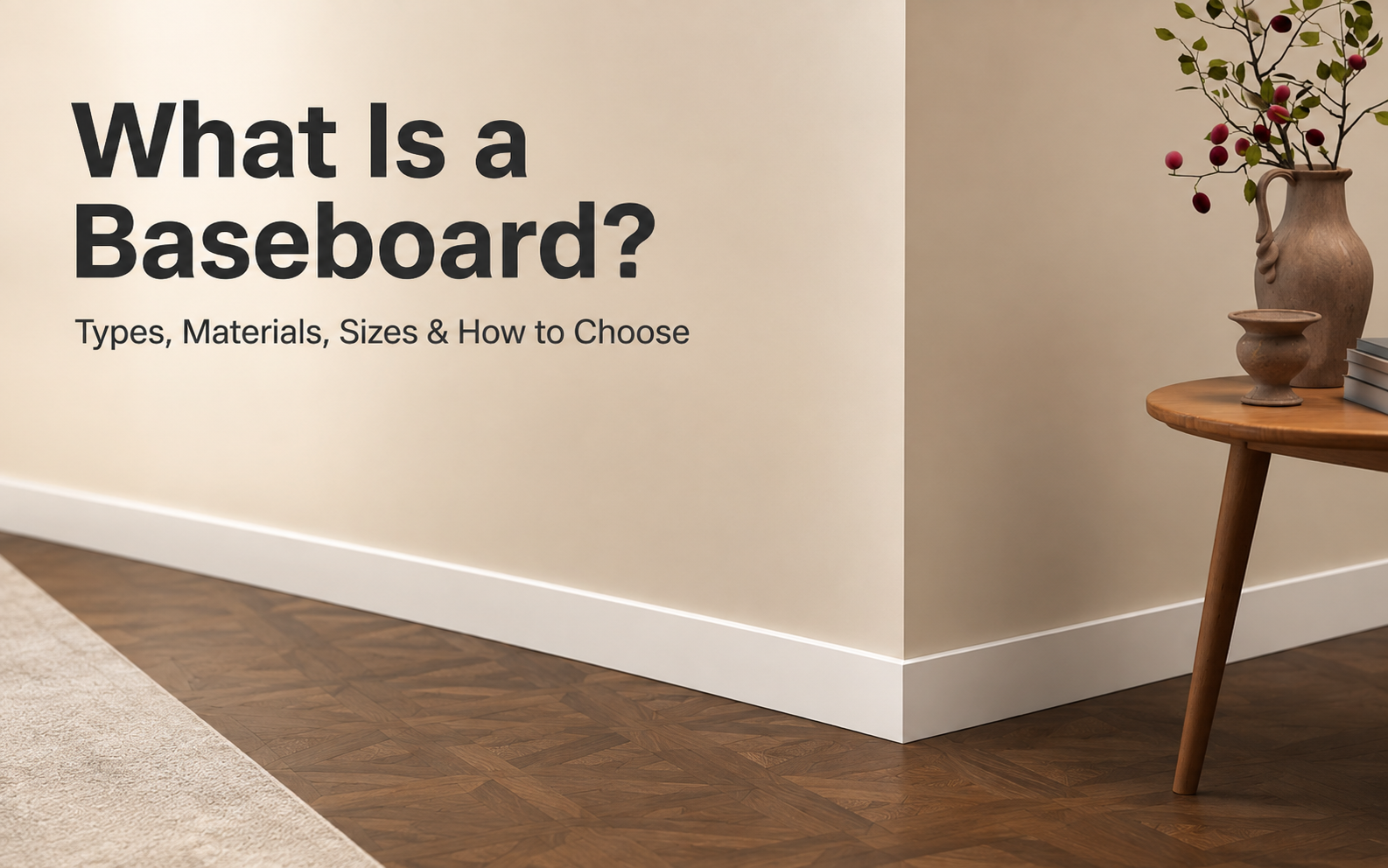
A baseboard is a decorative and functional molding installed along the bottom of an interior wall, covering the joint where the wall meets the floor. It creates a finished transition between the two surfaces while helping protect walls from daily wear.
In the United States, the term “baseboard” is widely used. In other markets, particularly the United Kingdom and Australia, the same product is often called a skirting board.
Baseboards are available in various materials, heights, profiles, and finishes. Understanding these differences can help homeowners, designers, contractors, and building-material distributors select the right solution for each project.
What Is the Purpose of a Baseboard?
Although baseboards are often considered decorative elements, they also serve several practical purposes.
Protecting the Wall
The lower part of a wall is vulnerable to damage from furniture, shoes, vacuum cleaners, cleaning equipment, and everyday impacts. A baseboard provides an additional protective layer in these high-contact areas.
Covering Floor-to-Wall Gaps
Small gaps are often left between flooring and walls to accommodate installation tolerances or material expansion. Baseboards cover these gaps and create a cleaner transition.
Improving Interior Design
The shape, height, color, and surface finish of a baseboard can influence the overall appearance of a room. A simple profile supports modern interiors, while a more detailed baseboard molding can complement traditional or decorative spaces.
Creating Visual Balance
Baseboards visually frame the lower part of a room. When properly selected, they help connect the flooring, wall panels, door frames, and other decorative elements.
Baseboard vs. Skirting Board: What Is the Difference?
There is no significant functional difference between a baseboard and a skirting board. The distinction is mainly regional.
“Baseboard” is the standard term in the United States and Canada, while “skirting board” is more commonly used in the United Kingdom, Australia, and several other markets. Both terms describe molding installed where an interior wall meets the floor.
For projects intended for the American market, terms such as baseboard, baseboard trim, and baseboard molding are generally more appropriate.
Common Types of Baseboards
Baseboards can be classified by their profile and decorative style.
Flat Baseboards
Flat baseboards have a clean and simple surface with minimal detailing. They are commonly used in contemporary homes, offices, apartments, hotels, and commercial interiors.
Rounded Baseboards
These products feature a gently rounded upper edge. The smooth transition makes them suitable for both modern and transitional interior styles.
Decorative Baseboards
Decorative baseboard molding may include grooves, stepped edges, curves, or embossed details. It is often used in classical, European-style, or luxury interiors.
Tall Baseboards
Tall baseboards create a stronger visual presence and are often used in rooms with high ceilings. They can also help make plain walls appear more structured.
Flexible Baseboards
Flexible products are designed for curved walls, columns, and other irregular surfaces. They are commonly selected for customized interior projects.
Popular Baseboard Materials
Material affects the appearance, moisture resistance, durability, installation method, and maintenance requirements of a baseboard.
Wood Baseboards
Solid wood provides a natural appearance and can be painted or stained. It is frequently used in traditional interiors and projects requiring a premium wood finish.
However, wood may expand, shrink, crack, or warp when exposed to changing humidity. It may also require additional painting and maintenance.
MDF Baseboards
Medium-density fiberboard is widely used for painted interior molding. Its smooth surface makes it suitable for producing consistent profiles and paint finishes.
MDF is generally intended for dry indoor spaces. Prolonged exposure to moisture may cause swelling or surface damage, so it should be selected carefully for bathrooms, kitchens, basements, and other humid areas.
PVC Baseboards
PVC baseboards offer good moisture resistance and are easy to clean. They are frequently used in utility areas, bathrooms, kitchens, and commercial environments.
Their appearance and surface texture may vary depending on the production process and decorative finish.
PS Baseboards
A PS baseboard is manufactured from polystyrene and designed as a lightweight alternative to conventional wood or MDF molding.
PS products can be made in different profiles, colors, and decorative finishes. Depending on the product specification, they may offer moisture resistance, resistance to common household insects, easy maintenance, and efficient installation.
Because PS baseboards can reproduce wood-grain, solid-color, metallic, and other decorative surfaces, they are suitable for residential developments, offices, hotels, retail spaces, and renovation projects.
What Is Baseboard Molding?
Baseboard molding refers to the decorative profile or shape of a baseboard. The term is often used when discussing architectural details, surface patterns, and interior styles.
Common options include:
- Plain and flat profiles
- Rounded-edge profiles
- Grooved designs
- Stepped profiles
- Wood-grain finishes
- Metallic finishes
- Stone-inspired surfaces
For distributors and project buyers, offering several baseboard molding styles makes it easier to meet different regional and interior design requirements.
What Is Baseboard Trim?
Baseboard trim is another common American term for the finishing material installed along the bottom of a wall. It emphasizes the product’s role as an interior finishing and edging element.
Baseboard trim is often coordinated with door casing, wall molding, flooring, wall panels, and other interior trim products. Using related colors and profiles can create a more consistent design throughout the space.
How to Choose the Right Baseboard Height
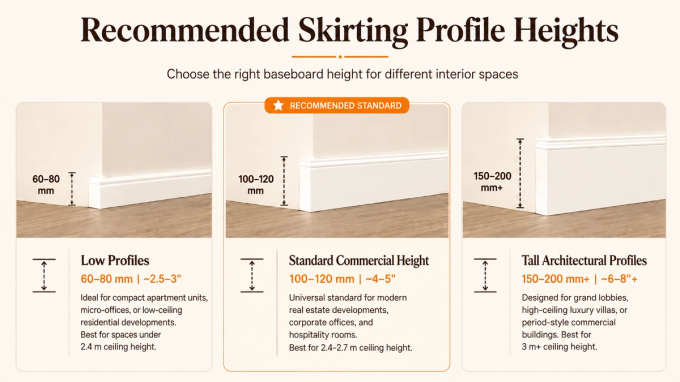
The appropriate height depends on the ceiling height, room size, design style, and desired visual effect.
Lower baseboards usually create a subtle and simple appearance. Taller profiles provide a more decorative look and can help balance large rooms or high ceilings.
As a general design principle:
- Smaller rooms usually work well with simple, moderately sized profiles.
- Standard residential rooms can use medium-height baseboards.
- Rooms with high ceilings can accommodate taller baseboards.
- Commercial and hospitality projects may use wider or taller profiles to increase durability and visual impact.
Buyers should also consider how the baseboard height coordinates with door frames, wall panels, and other moldings.
How to Select a Baseboard for Different Rooms
Living Rooms and Bedrooms
Appearance and coordination are usually the main considerations. Wood-grain, neutral-color, or simple flat profiles can complement a wide variety of flooring and furniture styles.
Bathrooms and Kitchens
Moisture resistance and easy cleaning are particularly important. PS or PVC products may be more suitable than moisture-sensitive materials, depending on the technical specifications.
Hotels and Apartments
These projects often require consistent quality, efficient installation, easy maintenance, and reliable volume supply. Lightweight baseboards with repeatable colors and profiles can support large-scale installation.
Offices and Retail Spaces
Commercial interiors need baseboards that combine a professional appearance with practical maintenance. Neutral colors and modern profiles are commonly selected.
Renovation Projects
Lightweight products that are easy to cut, transport, and install can help simplify renovation work. A baseboard may also cover minor gaps or imperfections along the bottom of an existing wall.
Why Consider PS Baseboards?
PS baseboards provide an alternative for buyers looking beyond traditional wood and MDF products. Their main advantages may include:
- Lightweight construction
- Moisture-resistant material
- Easy-to-clean surfaces
- Consistent profiles and finishes
- Multiple colors and decorative designs
- Reduced risk of cracking or warping under normal indoor conditions
- Compatibility with residential and commercial interiors
- Customization options for project and wholesale orders
Actual performance depends on product structure, surface treatment, installation conditions, and supplier specifications. Buyers should confirm dimensions, finishes, test reports, packaging, and installation requirements before placing an order.
What Should B2B Buyers Consider?
Distributors, wholesalers, contractors, and project buyers should evaluate more than appearance alone. Important purchasing factors include:
- Material composition
- Product dimensions
- Available profiles and finishes
- Color consistency
- Moisture and impact performance
- Installation method
- Minimum order quantity
- Production capacity
- OEM and ODM options
- Packaging requirements
- Quality inspection procedures
- Export and project experience
Requesting samples before a bulk order can help buyers confirm the color, profile, surface texture, and compatibility with other interior materials.
Frequently Asked Questions
Is a baseboard the same as a skirting board?
Yes. Both terms describe the molding installed between an interior wall and the floor. “Baseboard” is more common in the United States, while “skirting board” is more widely used in the United Kingdom and Australia.
What is the best material for a baseboard?
The best material depends on the project. Wood offers a natural appearance, MDF provides a smooth painted surface, and PVC or PS may be preferred where moisture resistance and easy maintenance are important.
Can PS baseboards be used in bathrooms?
PS baseboards can be suitable for humid indoor areas because the material does not absorb moisture in the same way as MDF. However, buyers should confirm the supplier’s product specifications and installation recommendations.
Should baseboards match the floor or the wall?
They can match either surface or create a deliberate contrast. White and neutral baseboard trim is versatile, while wood-grain finishes can coordinate with flooring, doors, or furniture.
Can baseboards be customized for wholesale projects?
Many manufacturers provide customized profiles, dimensions, colors, finishes, labels, and packaging. Available options usually depend on order quantity and production requirements.
Conclusion
A baseboard does more than cover the joint between a wall and the floor. It protects interior surfaces, completes the room’s appearance, and connects flooring with other architectural details.
When selecting a baseboard, buyers should compare the material, size, profile, finish, application environment, and maintenance requirements. Wood and MDF remain familiar options, while PS baseboards offer a lightweight and versatile solution for many residential and commercial projects.
INTCO DECOR supplies PS baseboards in multiple profiles and decorative finishes for distributors, wholesalers, contractors, and interior projects. Contact us to request product catalogs, samples, specifications, and B2B pricing.