SPC Wall Panels for Bathrooms: A B2B Buyer's Guide
SPC wall panels are the waterproof wall solution for bathrooms and commercial wet areas. This guide covers the six specifications B2B buyers must check before ordering.
SPC Wall Panels for Bathrooms: A B2B Buyer's Guide
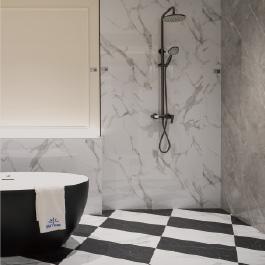
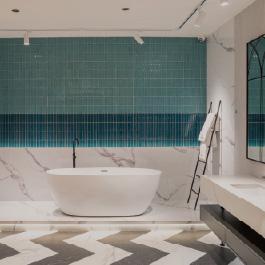
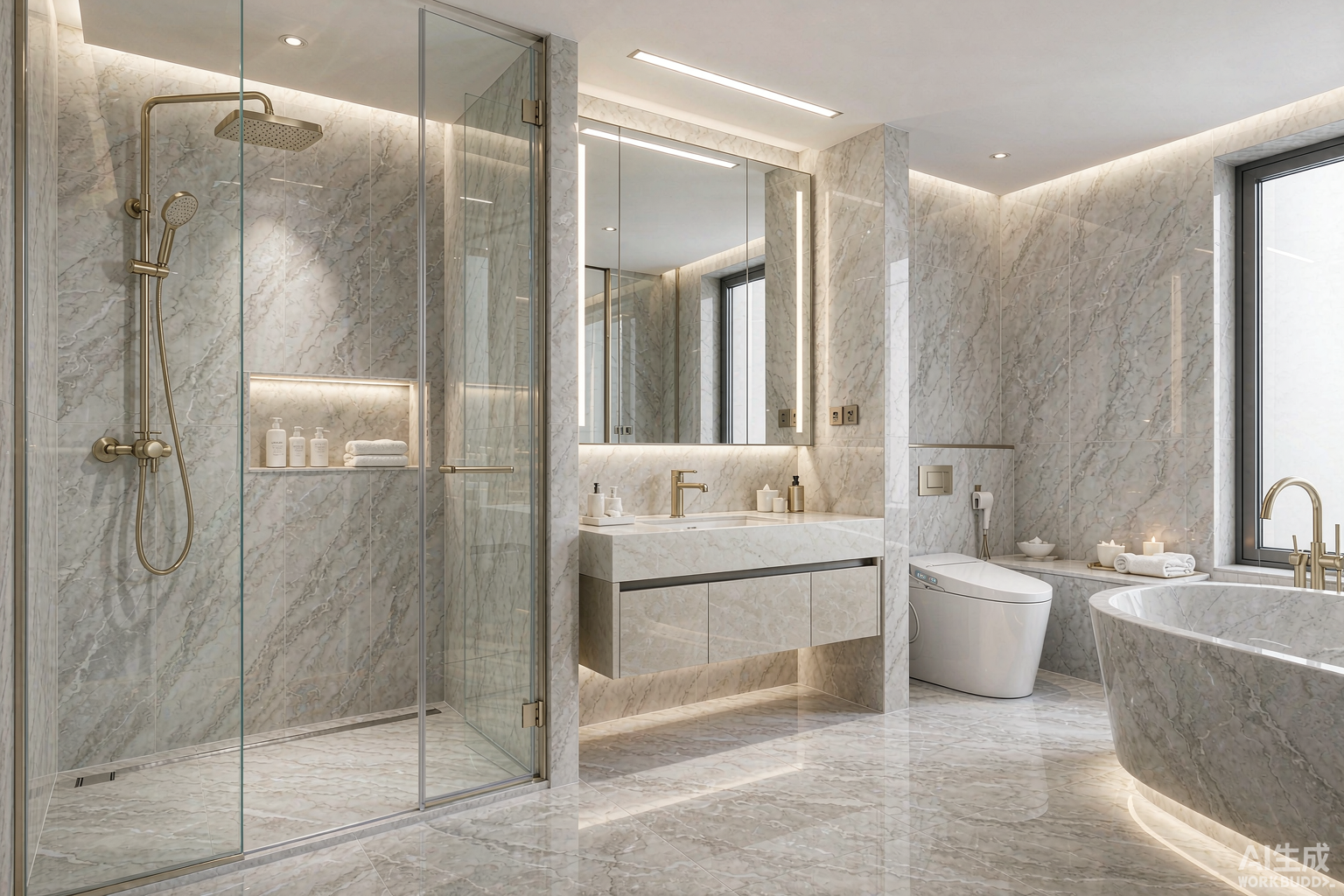
When buyers ask us for a bathroom wall solution that is waterproof, quick to install, and cost-predictable, SPC wall panels are almost always the answer. Stone Plastic Composite panels are engineered specifically for wet areas, which is why hotels, apartment builders, and renovation contractors now specify them over tiles and paint.
This guide is written for importers, distributors, and project buyers. It walks through the six specifications you should check before placing an order, so the panels you receive meet your market's code and your customers' expectations.
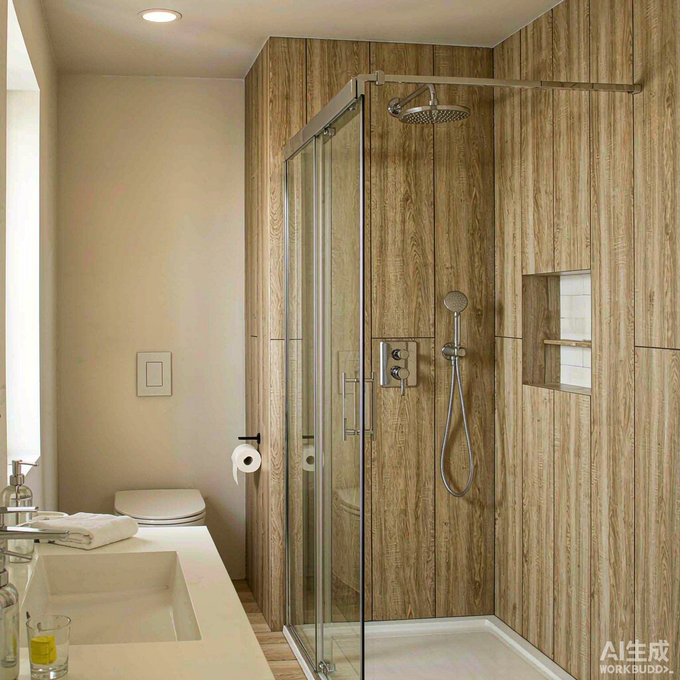
Why SPC Wall Panels Suit Bathrooms
Bathrooms fail on three fronts: moisture, mold, and installation time. SPC panels address all three.
• 100% waterproof core — Unlike MDF or wood-based panels, the SPC core absorbs no water, so it will not swell, warp, or delaminate in steam.
• Mold and mildew resistant — The dense core leaves no food source for mold, a key selling point in humid climates.
• Fast installation — Click-lock panels go up over existing tiles with no demolition, which cuts labor cost and project time dramatically.
• No grout lines — Tiles leak at the grout; SPC panels have no grout, which removes the most common failure point.
For a distributor, the last point is the easiest to sell: no grout means no regrouting callbacks.
6 Specifications to Check Before Ordering
1. Core Type: SPC vs WPC
Do not confuse SPC with WPC. Both are waterproof, but they serve different buyers.
• SPC core is denser, thinner (typically 4–8 mm), and more impact-resistant. It is the better choice for floors and high-traffic wet walls.
• WPC core is thicker and lighter, with a softer feel, often preferred for decorative wall cladding.
For bathroom walls, specify SPC unless your customer explicitly asks for a thicker, softer panel.
2. Thickness and Wear Layer
Panel thickness drives both cost and durability.
• 4 mm — entry-level, best for budget residential projects.
• 6 mm — the sweet spot for most bathroom walls.
• 8 mm+ — commercial and hospitality projects that need extra rigidity.
The wear layer (the transparent top film) is what resists scratches and stains. Ask for at least 0.3 mm on bathroom panels; 0.5 mm is standard for commercial specifications.
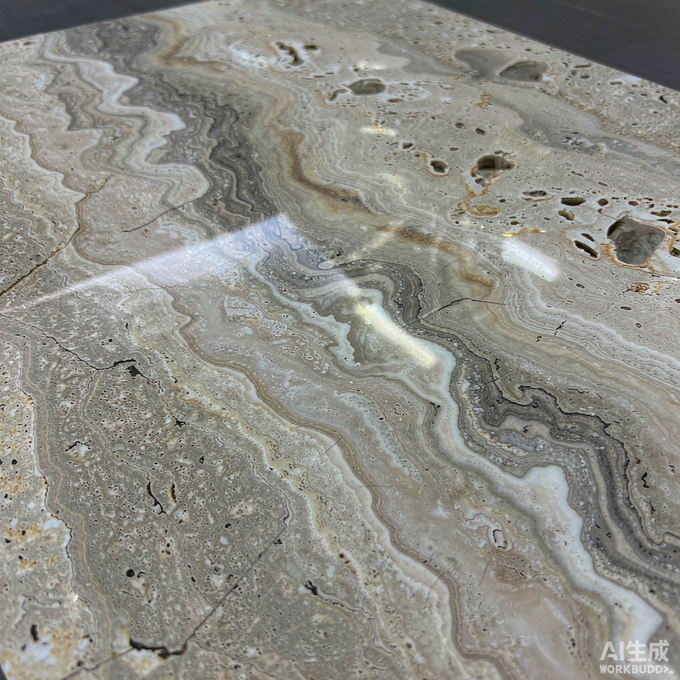
3. Surface Finish and UV Coating
The surface finish determines cleanability and longevity.
• UV-coated finish resists stains from soap, shampoo, and hard water — essential for bathrooms.
• Matte vs glossy — glossy looks premium but shows water spots; matte hides them. Stock both if you serve residential and commercial buyers.
• Texture — embossed finishes add slip resistance for shower walls and a more premium look.
4. Click-Lock vs Glue-Down
The installation system affects who can install it and how fast.
• Click-lock is DIY-friendly and faster, which suits renovation contractors and retail buyers.
• Glue-down is thinner and cheaper per square meter, but requires a perfectly flat substrate and a skilled installer.
For bathroom walls, click-lock is the easier resale because it shortens the job.
5. Certifications
B2B buyers in developed markets will ask for documentation. Have these ready:
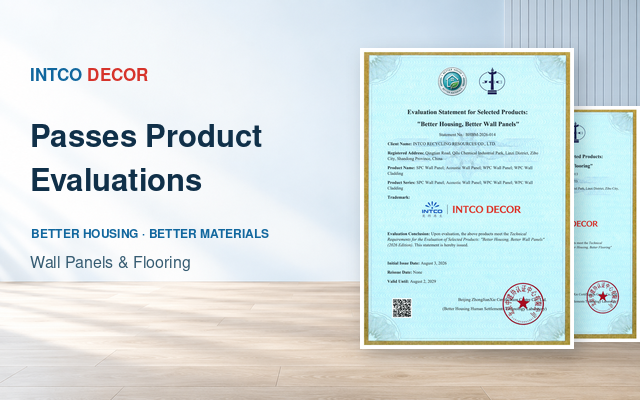
• SGS / TÜV test reports for waterproofing and formaldehyde emission.
• Fire rating (e.g., EN 13501 or ASTM E84) if the panels go into hotels or public buildings.
• ISO 9001 / 14001 for the factory, which reassures buyers about quality consistency.
A supplier who cannot produce test reports will lose the tender before price is even discussed.
6. MOQ and Customization
Understand the order economics before quoting.
• MOQ — confirm the minimum order quantity (commonly one container for OEM, lower for stock patterns).
• Custom sizes and colors — OEM/ODM allows you to match a client's design, but custom runs carry a longer lead time.
• Packing and loading — reinforced packaging prevents edge damage in transit; confirm whether panels ship flat or on pallets.
SPC vs Ceramic Tiles for Bathrooms
The comparison you will face on every sales call:
• Waterproofing — SPC: full coverage, no grout. Tiles: leak at the grout lines.
• Installation speed — SPC: hours. Tiles: days.
• Demolition required — SPC: no. Tiles: usually yes.
• Weight — SPC: light. Tiles: heavy.
• Total installed cost — SPC: lower. Tiles: higher.
Tiles win on heat resistance and a "classic" look. SPC wins on speed, waterproofing, and total installed cost — which is what project buyers optimize for.
OEM/ODM Considerations for Importers
If you plan to brand these panels under your own name:
• Minimums — custom colors and embossing usually require a higher MOQ than stock.
• Lead time — budget 25–35 days for production plus shipping.
• Consistency — request a pre-production sample and sign off before the full run, to lock color and texture.
As a manufacturer exporting to 120+ countries, INTCO Decor supports OEM/ODM with a one-container starting quantity. Tell us your market's spec, and we match the panel to it.
FAQ
Are SPC wall panels fully waterproof?
Yes. The stone-plastic core absorbs no water, unlike MDF or wood-based panels.
Can SPC wall panels be installed over existing tiles?
Yes, with click-lock panels. This is the fastest way to renovate a bathroom without demolition.
Do SPC wall panels need grout?
No. The panels interlock, which removes grout lines and the regrouting maintenance they require.
What is the MOQ for SPC bathroom wall panels?
Typically one container for OEM. Stock patterns may ship in smaller quantities — contact us for current minimums.
Looking for a waterproof bathroom wall system for your market? Contact INTCO Decor for specifications, samples, and OEM/ODM quotes.